As the German Energiewende accelerates, the rapid adoption of heat pumps and EVs is placing unprecedented pressure on low-voltage distribution networks. The implementation of §14a EnWG marks a paradigm shift: we are moving from passive distribution to active grid management.
For us, the question isn't just about compliance. It’s about continuity: How do we ensure power reliability for homes and businesses when the grid is constrained?
Effective January 1, 2024, the new regulation stipulates that "Controllable Consumption Devices" (SteuVE) must be controllable by Distribution System Operators (DSOs). When the grid is overloaded, power draw can be temporarily limited (dimmed) to 4.2 kW.
For a modern household or a commercial facility, 4.2 kW is often not enough to maintain normal operations. This is where hardware capability makes all the difference.
Empowering Homes and Businesses
Our Residential and Commercial Energy Storage Systems are designed to turn this regulatory constraint into a seamless experience.
We view our Energy Storage Systems not merely as power backup, but as an Intelligent Energy Hub.
How it works in practice:
When the grid operator sends a signal to limit power:
Seamless Handover: Our system instantly recognizes the signal and caps the grid intake to the compliant level.
Power Compensation: The ESS automatically discharges to cover the remaining load.
Uninterrupted Operation: Whether it is a family running a heat pump or a business operating critical equipment, the user experiences zero disruption.
The grid gets the stability it needs; the user gets the power they demand.
As a manufacturer of storage systems and EV chargers, Swatten has realized this compliance with one relay contact on FNN control box.
As the following picture shows, Swatten hybrid inverter will connect with one of 4 relays on FNN control box. It can use the other 3 relays for EEG power control RRCR.
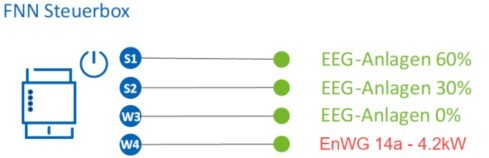
Picture 1: Relaisverbindungen der FNN Steuerbox
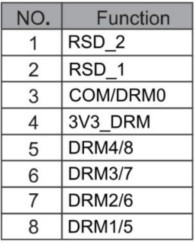
Please find the port definition in the following table:
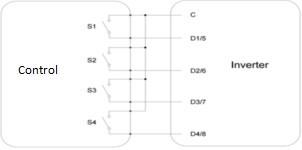
S1 | S2 | S3 | S4 | Control Box | Output power (in% of the Rated AC output power) |
0 | 0 | 0 | 0 | None | 100% (configurable according to need) |
1 | 0 | 0 | 0 | Close S1 | ENWG 14a - draw power |
0 | 1 | 0 | 0 | Close S2 | 60% |
0 | 0 | 1 | 0 | Close S3 | 30% |
0 | 0 | 0 | 1 | Close S4 | 0% |
The §14a EnWG connector on inverter is in RRCR function area on communication port.
The Three Phase Hybrid Inverter (HV) SiH-5-10kW-TH and SiH-10PRO~50kW-TH have the same DRM port definition.
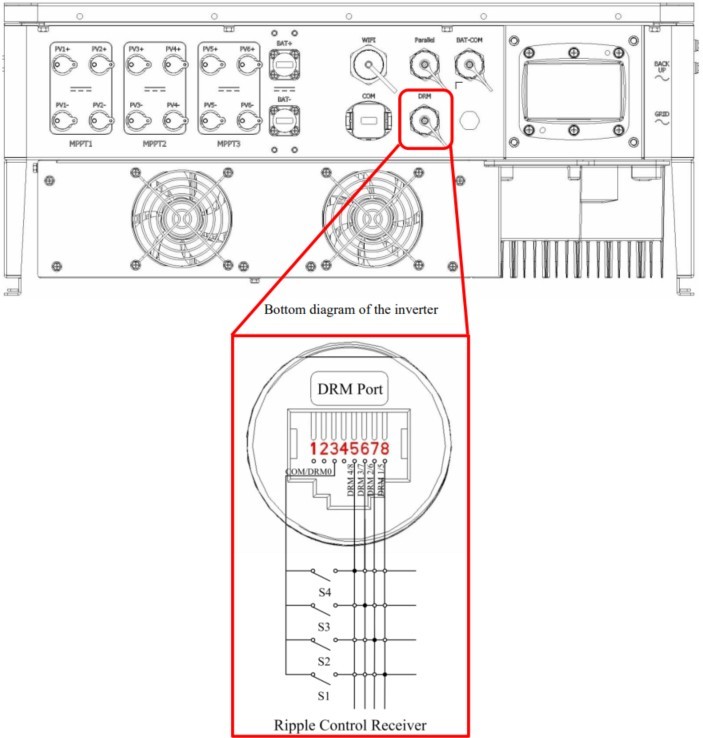
Swatten hybrid inverter could be as EMS to control battery and EV charger.
The connection is the same as hybrid inverter only.
But it is Swatten EMS could provide better experience, without decreasing the power of EV charger. Because the battery could give up the charging as this time, and EV charger could get the quota of the battery. What’s more, the battery could discharge for the EV charger.
The limitation power as below as EMS solution following the §14a EnWG
P 14a = 4,2 kW + (nsteuVE – 1) x GZF x 4,2 kW

For example,
Only Swatten hybrid inverter :nsteuVE=1,P14a=4.2kw
Swatten hybrid inverter + Swatten EV charger as one system:nsteuVE=2,P14a=7.56kw
The customer could get more benefit from the EMS design.
To activate full §14a compliance and the intelligent load adjustment logic, simply ensure your inverter is running the latest supported firmware version.
Configuration is just as intuitive as the installation. Through the 'Device Control' interface, users can simply activate the 'RIPP Enable' parameter. This single step fully authorizes the system to process external grid commands.

Conclusion
At Swatten, we turn §14a compliance into a tangible advantage. By streamlining installation to a single relay contact and leveraging our Hybrid Inverter as an intelligent EMS, we do more than just meet regulations. We elevate your energy capacity—boosting the grid power allowance from 4.2 kW to 7.56 kW (Inverter + EV Charger) while ensuring seamless operation. With Swatten, you secure both grid compliance and maximum power availability.

